
New Zealand has a whole secret language hidden in its drinks — little cultural clues tucked into milkshake cups, juice ads, and bottles that have been on dairy shelves longer than most of us have been alive. Spotting them feels a bit like joining a national treasure hunt: the more you notice, the more you realise Kiwis communicate through beverages as much as words. Our drinks carry their own stories, their own in‑jokes, and their own place in the culture.
New Zealand’s drinks are nostalgic, practical, proudly local, and often world‑class without ever shouting about it. This is the unofficial guide to the beverages that fuel Aotearoa — from childhood classics to vineyard royalty.
Water in Aotearoa
Safe, Free, and Occasionally a National Scandal
New Zealand is one of the few countries where you can confidently drink straight from the tap. Urban, rural, small town — if there’s ever an issue, it becomes public scandal territory. Front‑page news.
Prime‑time coverage.
Political fallout.
Because safe drinking water is a non‑negotiable Kiwi expectation.
Our grandparents would have looked at us like we were one sandwich short of a picnic if we said we were paying for drinking water. “Why buy something that comes out of the tap for free?”
The Perrier Moment — When Bottled Water Arrived
It all began when Perrier arrived and tried to convince us sparkling water was sophisticated.Kiwis tasted it and quietly wondered:
“Why is this better than L&P?”
It was mildly acceptable… but it didn’t dethrone the tap.
Then came:
- flavoured waters
- vitamin waters
- electrolyte waters
- alkaline waters
- hydration boosters
- and the iconic Pump bottle, which became the school‑lunch and sports‑game accessory of the nation
Dented, scratched, refilled endlessly — Pump bottles lived in every backpack and car door pocket.
So yes, the Hydration Trinity is real…but the tap is still the reigning monarch, with drinking fountains as its loyal foot soldiers.
The Evolution — Flavoured Waters & Sports Bottles
Fast‑forward to today and bottled water has exploded into:
- flavoured waters
- vitamin waters
- electrolyte waters
- alkaline waters
- “hydration boosters”
- and the ever‑present Pump bottle
Pump bottles became the unofficial school‑lunch and sports‑game accessory — dented, scratched, refilled endlessly, and living permanently in the bottom of every backpack.
Water went from “free from the tap” to a full‑blown industry.But deep down, every Kiwi still knows:
Tap water is king — unless the news says otherwise
The Hydration Trinity
Pump, Mizone, H2Go… and the Tap That Started It All
Today every school bag, gym bag, and car cupholder has seen at least one of these:
- Pump — the OG on‑the‑go bottle
- Mizone — the electrolyte era
- H2Go — the “I’m being healthy” choice
But the truth is, these bottled waters are really the commercial spin‑offs of New Zealand’s original hydration hero:
Tap Water — The Unofficial Fourth Member
New Zealand tap water is famously safe.If there’s ever an issue, it becomes national scandal territory — because hydration is practically a Kiwi right.
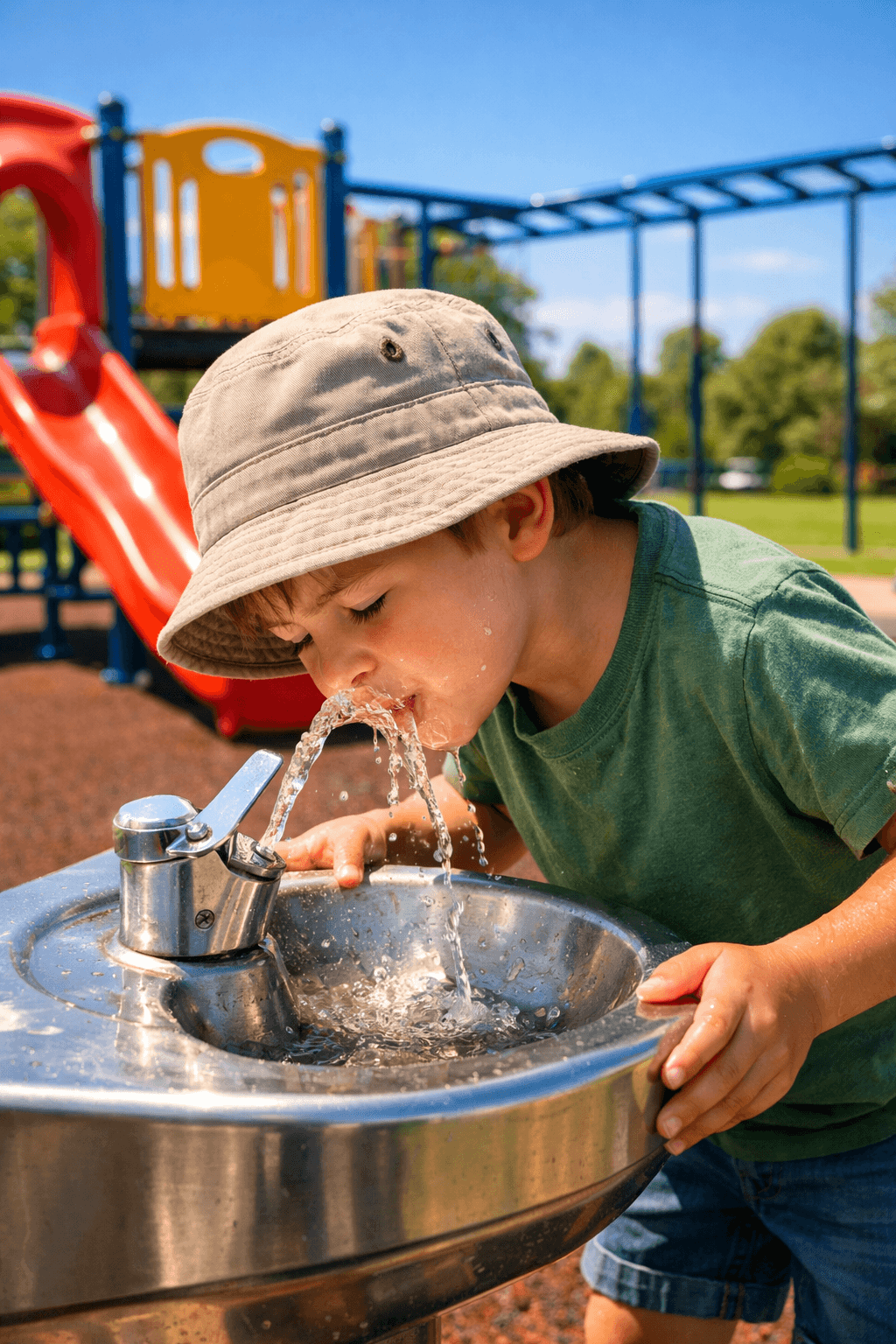
Drinking Fountains Everywhere
Because Hydration is a Kiwi Birthright
You’ll find drinking fountains in:
- parks
- playgrounds
- sports fields
- schools
- beaches
- walking tracks
- malls
- shopping centres
If there’s a public space, there’s probably a fountain.Some are pristine, some are slightly dodgy, but all are free.
Restaurants & Tap Water Etiquette
Free, Flexible, and Very Kiwi
Most restaurants will give you free tap water if you’re eating. Even the most budget places will usually give you water if you buy something and ask, as long as they have a container to put it in.
Because in New Zealand, hydration isn’t optional — it’s public health.
A Note on Asking for Water
Only When You’re
Not Sitting In
This applies only when you’re not dining in.
If you’re:
- grabbing a takeaway
- passing through an unfamiliar area
- overheated from the sun
- caught without a bottle
- or genuinely dehydrated
…then yes, most Kiwi places will help you out if they can.
It’s an emergency courtesy, not a daily habit. Kiwis don’t wander around cafés asking for water on regular visits — we’re practical, not cheeky.
If They Don’t Give You Water… Go Next Door
This is the unwritten Kiwi rule:
If a place refuses to give you water, go next door.
Because the moment someone says, “They wouldn’t even give water to a poor burnt visitor,”
that café becomes legendary — and not in a good way.
Kiwis talk. Kiwis remember.
And Kiwis absolutely judge a business that won’t help someone who’s clearly dehydrated.
Directing You to Free Water Is Acceptable
If they say:
- “There’s a drinking fountain just outside,”
- “The mall has free water around the corner,”
- “There’s a tap by the bathrooms,”
…that’s fine.That’s still hospitality.
Unless you’re about to pass out. If you’re visibly struggling, the expectation is they’ll sort you out immediately.
Why We Take Hydration Seriously
New Zealand isn’t as hot as Australia or India, but our sun is intense. The UV is brutal.
And if you’re not used to it — especially after days at the beach or on the water — you can end up with sunstroke, a temporary dehydration state that sneaks up on people.
Kiwis know this. So water is always available, always nearby, and always free somewhere.
Tap Water in Restaurants — Free, But Basic
Most restaurants will give you free tap water if you’re eating. But don’t expect:
- ice
- fancy glasses
- lemon slices
Those are reserved for paying customers. You’ll get a jug and some basic cups — functional, Kiwi, no fuss.
The Courtesy Upgrade
In nicer restaurants, the water gets an upgrade:
- chilled
- poured at the table
- nicer glasses
- sometimes even a lemon slice
It’s part of their hospitality “welcome.”But it’s not universal — it’s simply a sign you’ve wandered into a place with a bit more polish.
The Kiwi Bottom Line
If you’re thirsty, ask. If they can, they’ll give you water.
If they won’t, go next door — and trust that the story will travel.
Hydration is practically a Kiwi right.
Lemon & Paeroa — World‑Famous in New Zealand
Before Sprite. Before 7UP.
Before the global lemon‑lime takeover…
New Zealand already had Lemon & Paeroa.
It’s not clear.It’s not lemonade.
It’s better.
A sweet, slightly quirky, unmistakably Kiwi drink that tastes like summer holidays, road trips, and childhood.
So what’s Paeroa?
Paeroa is the small Waikato town where the drink was born — made originally from a natural mineral spring that locals swore had a unique flavour. That spring water gave L&P its signature taste, and the town still proudly claims it. There’s even a giant bottle to prove it.
A Kiwi Mixer Long Before Mixology Was Cool
Kiwis have been pairing L&P with spirits for generations — long before cocktail bars made citrus mixers fashionable.
Rarely Found Overseas
Unless you stumble into a Kiwi specialty shop abroad, you won’t find it. We keep it here like a national treasure.
Raro — The Childhood Classic
(and the Budget Hero That Refuses to Retire)
If you didn’t grow up with Raro, did you even grow up in New Zealand?
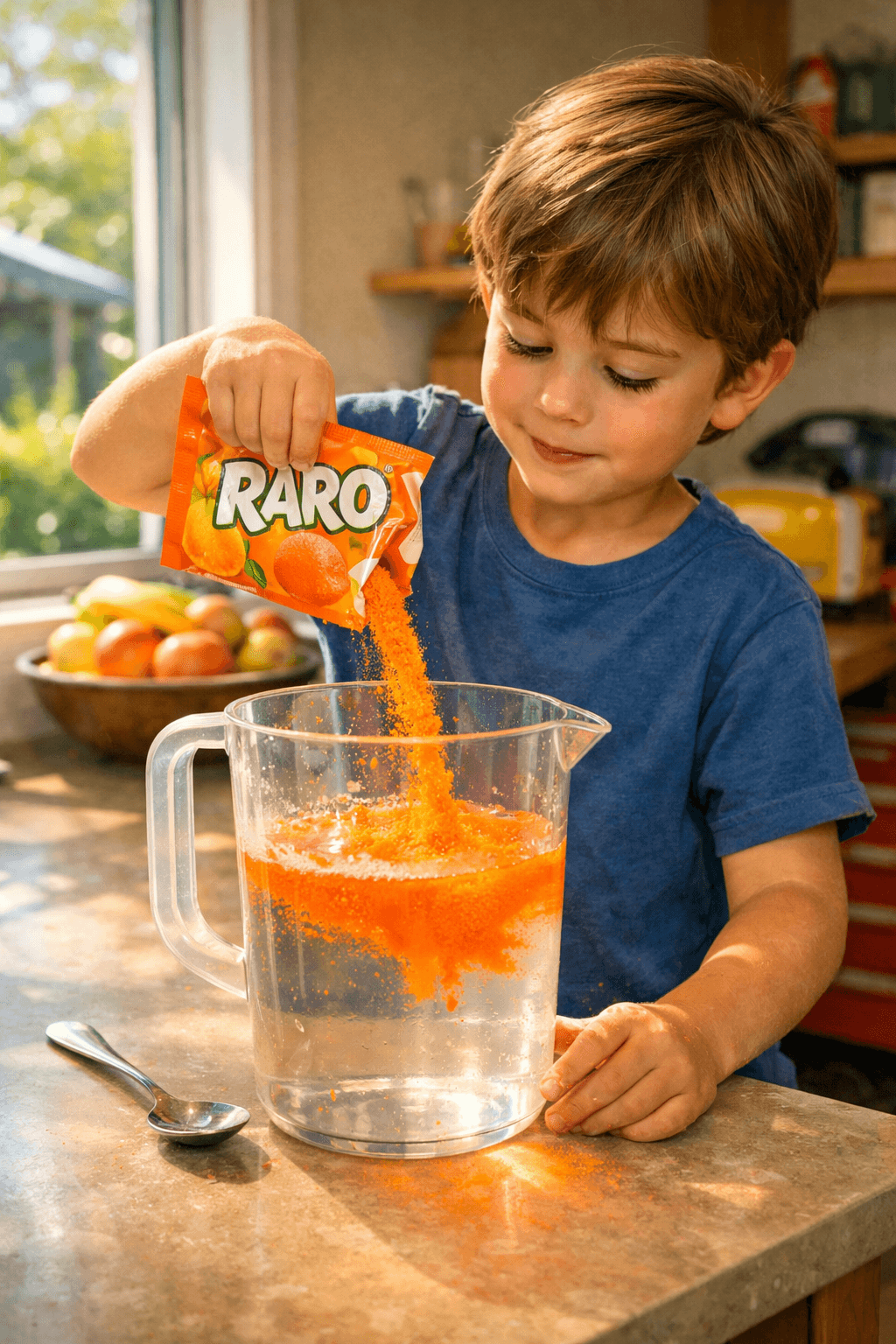
Raro is the powdered cordial that defined Kiwi childhood — and it’s still going strong because:
- it’s one of the cheapest drinks you can make at home
- it’s kid‑friendly
- it’s full of sugar
- and one packet makes litres of brightly coloured joy
When the budget’s tight, Raro steps up. It’s the drink that stretches, lasts, and somehow tastes like school holidays even when you’re drinking it on a rainy Wednesday.
Vitafresh — The Only Real Rival
Over the years, only one competitor has ever come close: Vitafresh .Slightly more “grown‑up,” slightly more “vitamin‑y,” but still firmly in the budget juice‑flavoured drinks category.
Raro vs Vitafresh is the cordial equivalent of Coke vs Pepsi — except cheaper, sweeter, and more Kiwi.
The Great Kiwi Raro Argument
Every household knows this one:
“Whose turn is it to make the Raro?”
Because making Raro is a chore, a responsibility, and a battleground. And the worst crime of all?
Leaving the last micromillimetre of Raro in the jug for the next person.
That tiny, sad, watery layer that’s basically flavoured disappointment. A generational offence.
A tradition that will absolutely continue into the future.
Raro isn’t just a drink. It’s a rite of passage, a budget strategy, and a family argument rolled into one.
Fresh Up — The Juice That Thinks It’s a Soft Drink
(and the Original Sports Drink of a Generation)
Fresh Up has always been a bit of a rebel. Not quite juice. Not quite soft drink.
Thick, sweet, refreshing, and absolutely everywhere.
But here’s the part every Kiwi kid remembers:
Fresh Up was marketed as practically a health drink. “It’s got to be good for you!”
And we believed it — because John Walker told us so.
Yes, that John Walker. 1500m Olympic Gold Medallist. Local hero.
The man who ran like the wind and made it look effortless.
If John Walker said Fresh Up was refreshing after sport, then by God, it was.
The Round the Bays Era
Before bananas became the post‑run standard, before electrolyte drinks lined the finish chute, before hydration science became a thing…you’d cross the finish line of Auckland’s Round the Bays and be handed:
- a cold Fresh Up
- in a can that felt like victory
- and tasted like pure, fruity relief
It was the unofficial sports drink of the nation — long before sports drinks existed.
Fresh Up wasn’t just a beverage. It was a moment. A reward. A childhood memory in a can.
The Garage Drink Fridge
The Secret Friday‑Night Bar
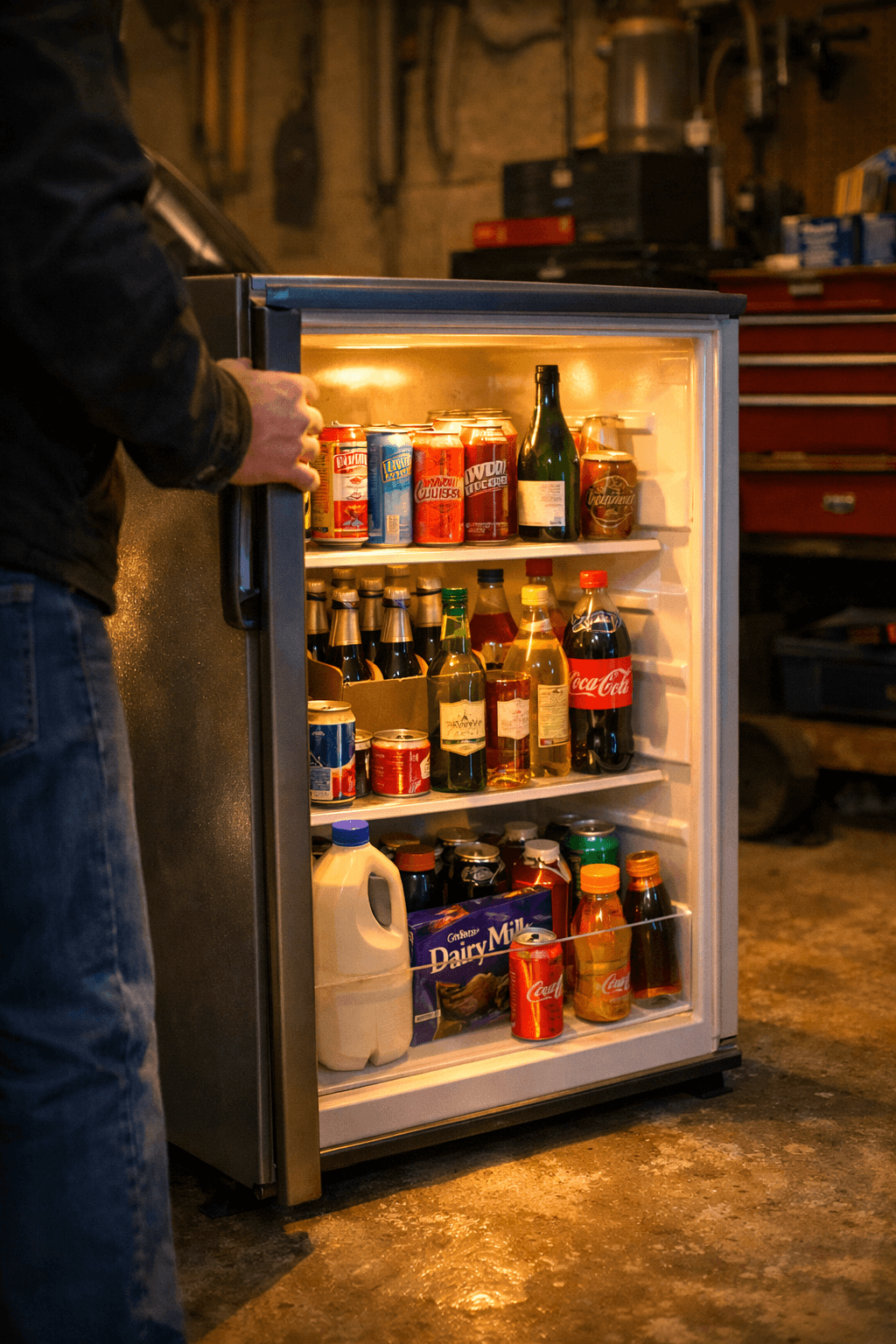
Every service station in New Zealand has the fridge — the glowing, frosty, irresistible wall of drinks. But the real garage fridge? That’s the one at home.
By day, it’s a respectable overflow fridge.By night — especially Friday night — it becomes the household’s secret bar.
And here’s the part every Kiwi knows but never admits:
There is always something in there you’re not supposed to have in your daily diet.
It might be:
- a stash of RTDs “for guests”
- a six‑pack that mysteriously never makes it inside
- a bottle of wine you’re “saving”
- a cheeky cider tucked behind the milk
- a block of chocolate hidden behind the frozen peas
- or that one energy drink you swear you don’t drink anymore
You open it for “ice” or “a spare bottle of water” and somehow walk out with something that definitely wasn’t on the approved list.
The garage fridge: fuel station by day, secret bar by night, temptation cupboard always.
Milkshakes
The Longest Drink in Town
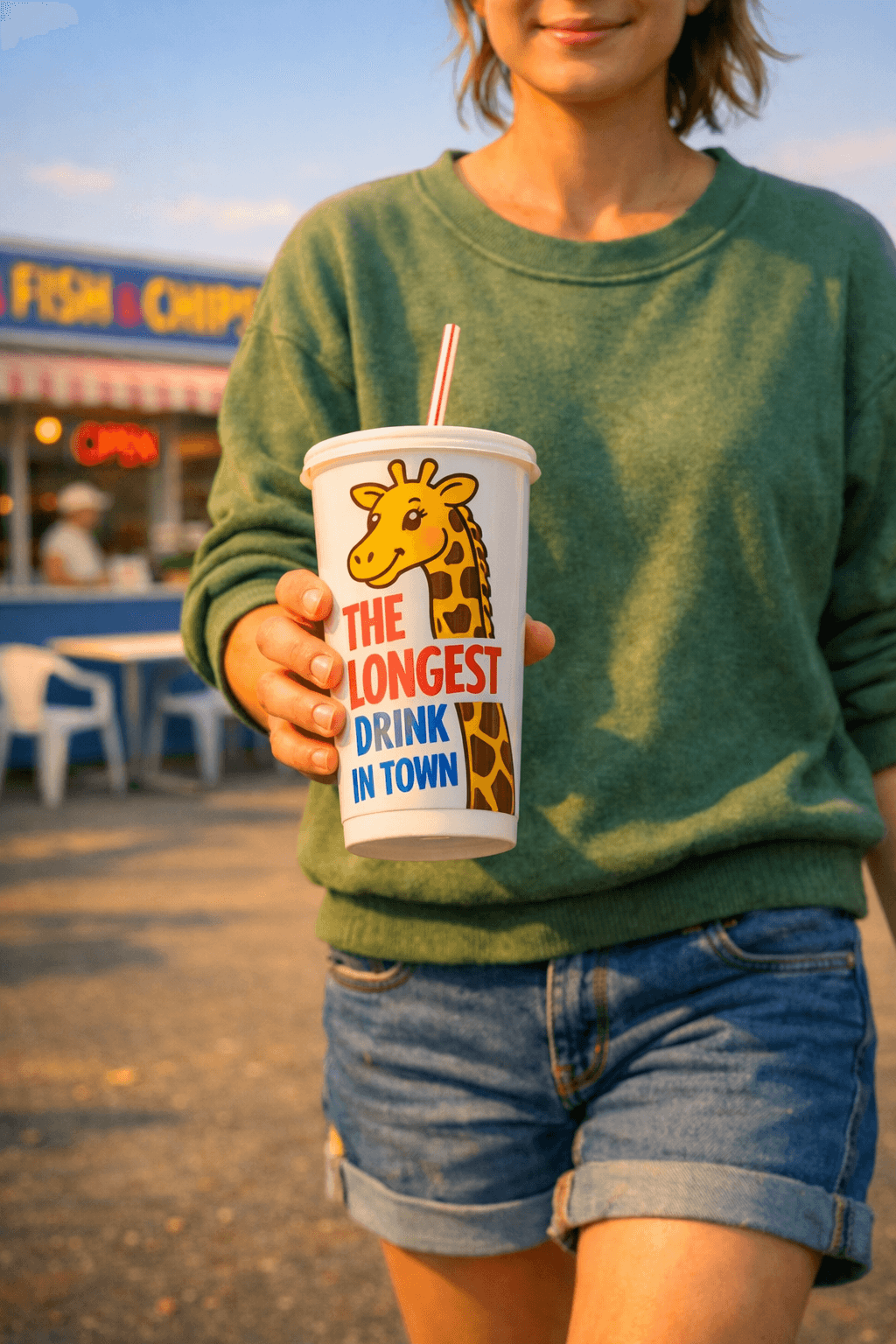
Before fast‑food chains arrived, before global franchises, before anyone said “frappe”…New Zealand already had milkshakes — and they came in this cup:
THE LONGEST DRINK IN TOWN. Tall. White. A giraffe with a neck longer than your arm.
A national relic.
You got milkshakes from:
- the fish and chip shop
- the dairy
- the corner takeaway bar
The Flavours
Simple. Classic. Unbeatable.
- Lime
- Spearmint
- Caramel
- Banana
- Chocolate
- Strawberry
Thickshakes were the deluxe version — the kind that bent straws.
Then the Smoothie Arrived…
Smoothies didn’t invade the dairy.They slipped quietly into the café scene, joining iced coffees and fresh juices.
Milkshakes stayed exactly where they belonged: in the giraffe cup, in the takeaway bar, in the Kiwi heart.
Flavoured Milk
The Tradie Breakfast in a Bottle
🥛 Flavoured Milk — The Spin‑Offs From Milkshakes
If milkshakes are the original Kiwi dairy superstar, then flavoured milks are the spin‑offs — the portable, bottled, on‑the‑go descendants of the Longest Drink in Town.
Primo, Mammoth, Calci‑Yum…They’re basically milkshakes that decided to get jobs, move out, and become responsible adults (sort of).
Chocolate, strawberry, banana, caramel — the classics.Plus the occasional limited edition that caused supermarket stampedes.
Up & Go — The Spin‑Off That Became a Franchise
And then there’s Up & Go — the most successful spin‑off of all.
Not quite a milkshake. Not quite a smoothie. Not quite a meal.
It’s the mysterious fourth category:
the liquid breakfast that got half the country to school and work on time.
Up & Go is what you grab when:
- you’re late
- you’re tired
- you’re pretending to be healthy
- you can’t face Weet‑Bix
- or you need calories but not cutlery
It comes in flavours that sound like they belong in a cereal aisle:
- Vanilla Ice
- Chocolate
- Banana
- Berry
- “Energize” (still a mystery)
It’s the ultimate breakfast on the run, the unofficial fuel of:
- students
- tradies
- office workers
- gym‑goers
- and anyone who simply cannot deal with mornings
Up & Go is the milkshake’s ambitious cousin — the one who went to uni, got a job, and still shows up at family BBQs pretending it’s not basically a milkshake with a diploma.
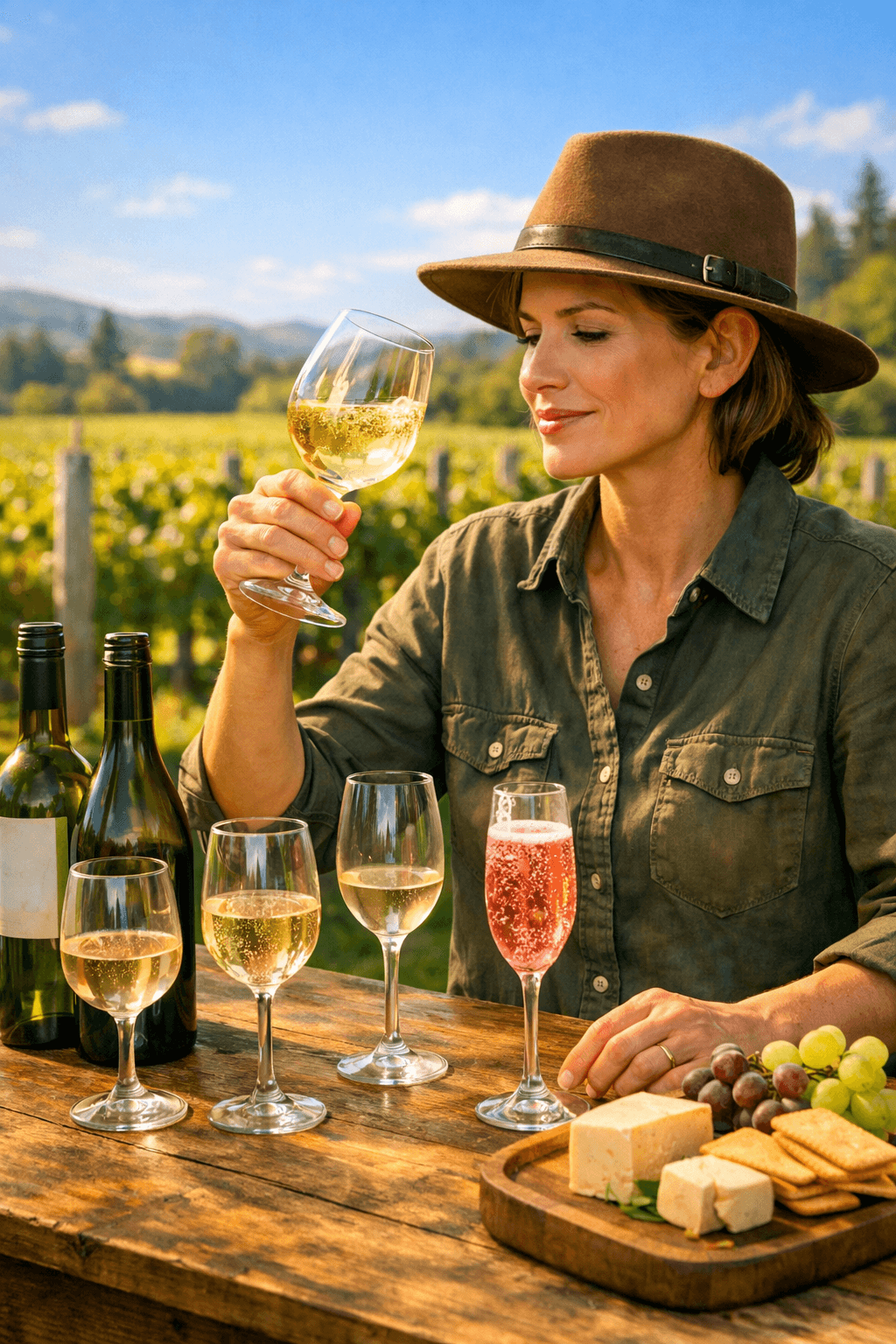
The New Zealand Wine Scene
Small Country, Big Reputation
New Zealand’s wine industry is one of our greatest quiet triumphs.World‑class, award‑winning, and still somehow humble.
Sauvignon Blanc — The Global Showstopper
Marlborough’s crisp, aromatic, unmistakable Sauvignon Blanc put NZ on the world map.
Chardonnay — The Quiet Achiever
From buttery Gisborne styles to refined Hawke’s Bay versions — elegant, balanced, underrated.
Pinot Noir — Move Over, Australia
Central Otago and Martinborough produce some of the best Pinot Noir in the New World.Silky, complex, and absolutely world‑class.
Wine Tasting Trips — A Kiwi Rite of Passage
Vineyard tours, cellar doors, gourmet platters, long lunches.From Waiheke to Marlborough to Queenstown — every region has its own personality.
Food & Wine Shows — The Ultimate Treat
If you get the chance to attend one, go. You’ll find:
- boutique wineries
- artisan cheeses
- small‑batch chocolates
- olive oils
- craft gins
- ciders
- cooking demos
It’s a sensory festival.
🍺 Craft Brews, Ciders & Gins
The Cottage Industry Boom
Craft Beer
Garage Project, Panhead, Emerson’s — breweries that turned beer into art.
Ciders
Crisp, fruity, refreshing — from orchard‑to‑bottle small producers to supermarket staples.
Gin
New Zealand gin has exploded in the last decade.Botanicals, native herbs, citrus, kawakawa, manuka — flavours that taste like the landscape.
42 Below — The Vodka That Put NZ Spirits on the Map
Before craft gin took over, New Zealand had 42 Below — the vodka that made the world look south and say, “They make this down there?”
Pure, smooth, award‑winning, and cheekily Kiwi. A national spirit icon.
🍹 The Kiwi Social Drink Culture
BBQs, Beaches & Chilly Bins
Ice from the garage. Bottles rolling around.
The sound of a can opening at sunset.
BYO Culture — Still Here, But Not as Common as It Once Was
BYO used to be everywhere — a beloved Kiwi tradition where you could bring your own bottle of wine to dinner and enjoy a great meal without the restaurant markup.These days, it’s becoming a little rarer as more places hold full licences.
But when you do find a BYO spot, it still feels like a treat — a little slice of old‑school Kiwi hospitality.
A Word of Caution
BYO doesn’t mean “free.”You will almost always be charged corkage, which might be:
- by the bottle
- by the number of glasses used
- or a flat table fee
Traditionally, BYO was only offered in unlicensed premises, and that’s still often the case.
Corkage covers:
- the staff who open and serve your wine
- the glasses
- the cleanup
- and the privilege of enjoying your own bottle in their space
It’s still great value — just not a loophole.
🌿 The Kiwi Drink Identity
Understated. High‑quality.
Locally made.
Full of personality.
And best enjoyed with good company.
These are the voyages of Random Circuits, boldly entering the arena of ideas that disrupt, challenge, and transform.