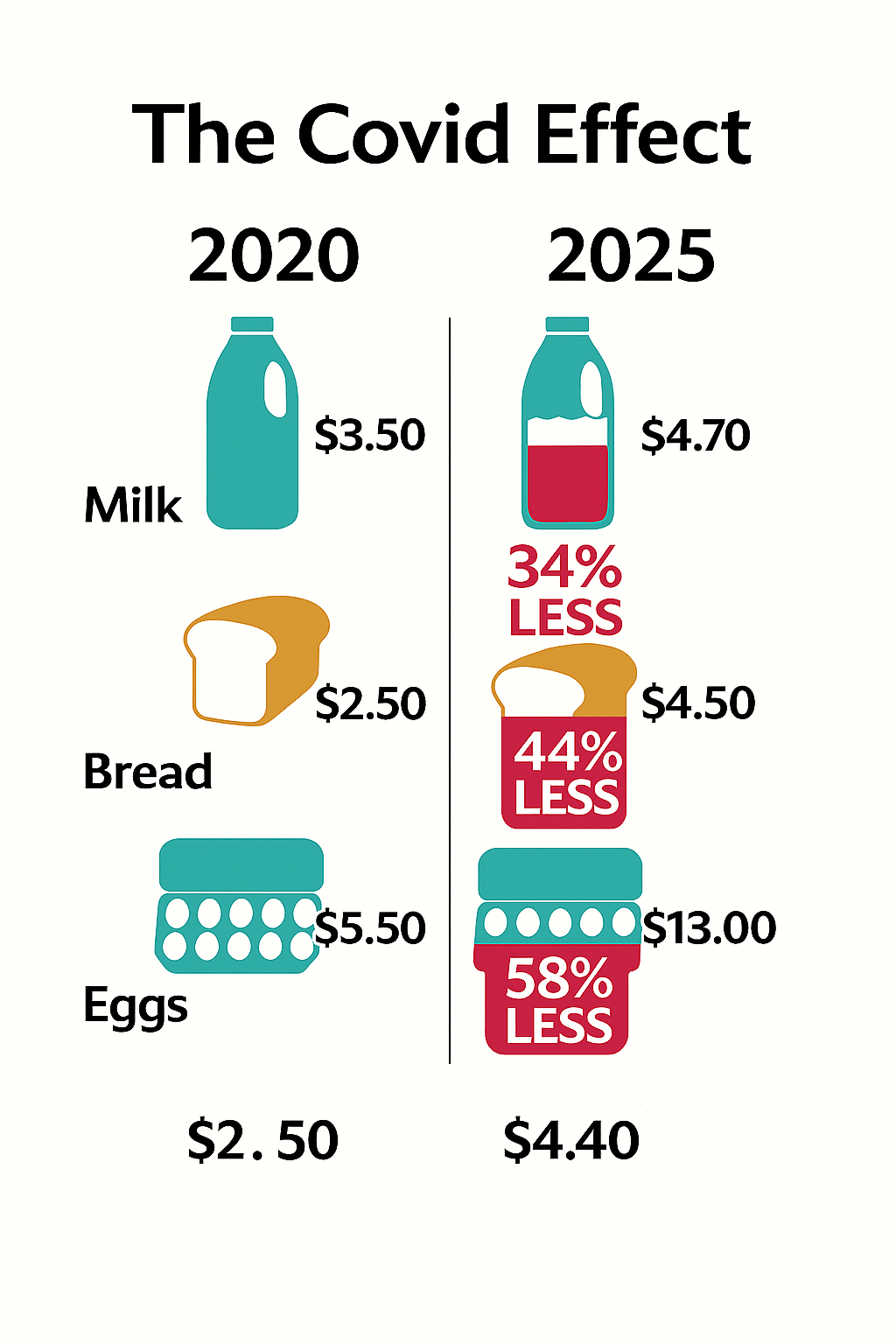
In Aotearoa NZ, where paddocks once fed pantries and resilience was measured in what you could make from flour, milk, and eggs, the price of a single egg now rivals a café flat white. But this isn’t just inflation—it’s eggflation.
A convergence of Covid fallout, cage bans, supermarket pledges, and chicken training protocols has cracked more than the grocery budget. It’s exposed the fragility of ethics without funding, resilience without access, and legacy without protection. Nanny didn’t need a forecast to see it coming. She had a pantry, a purse, and a civic ledger in her head. And what she saw wasn’t just a spike in prices—it was a rupture in the social contract. This blog threads that rupture into a diagnostic audit: of food systems, fallback protocols, and the cost of making do when the staples fly the coop.

In a country that once prided itself on paddocks, pantries, and self-sufficiency, the price of a single egg now rivals a café flat white. Granny would’ve been in a state—a dollar an egg?
In a land that produces its own food?
She didn’t need a spreadsheet to spot the cracks. She had a pantry, a purse, and a ledger in her head. And what she saw—Covid fallout, cage bans, supermarket pledges, and chicken training protocols—wasn’t just inflation. It was eggflation. And it wasn’t just about groceries. It was about legacy, ethics, and who gets priced out of resilience.
Nanny didn’t need a forecast. She had a pantry, a purse, and a ledger in her head.
She saw the first crack in 2020 when Covid hit.
She saw the second in 2023 when battery cages were banned.
And she sees the next one coming—when supermarkets ban all cages, and the price of ethics lands squarely on the checkout counter.
🦠 The Covid Effect: When Staples Stopped Being Stable
Back in her day, if you had eggs, flour, and milk, you had dinner.
Pancakes, fritters, Yorkshire pudding, custard, scones—
She could feed a family with those three.
And when the budget was tight, she did.
But Covid changed the equation.
Supply chains buckled. Feed costs surged.
And the basics—those fallback staples—became fragile.
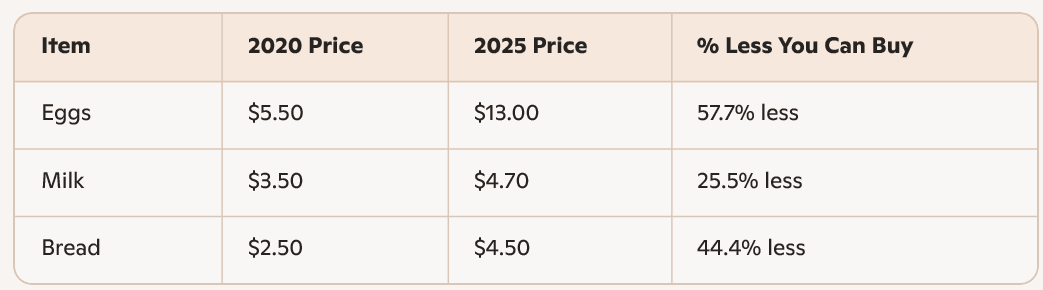
She didn’t blame the hens.
She blamed the system that let the prices fly while wages stayed grounded.
🐔 Egg Price Spike: Why It Happened
• In January 2023, New Zealand completed its ban on battery cages under the Animal Welfare (Layer Hens) Code of Welfare 2012.
Supermarket pledges:
• Countdown and Foodstuffs committed to cage-free eggs only by 2025 and 2027.
This led to:
• Reduced supply (fewer laying hens)
• Higher production costs (land, feed, infrastructure)
• Farmer exits and delayed conversions
• Shelf shortages and price hikes
🐔 The Cage Audit
• Battery cages: Banned in NZ as of January 2023.
• Gave hens 550 cm²—less than an A4 sheet.
• No room to stretch, nest, or dust bathe.
• Colony cages: Still legal.
• Slightly more space: 750 cm² per hen.
• Includes a perch or scratch pad.
• But Nanny knew: not all cages are born equal.
She didn’t oppose the ethics.
She opposed the unfunded virtue—the kind that says “do better”
without asking who pays.
🧠 Chicken Trainers: The New Profession?
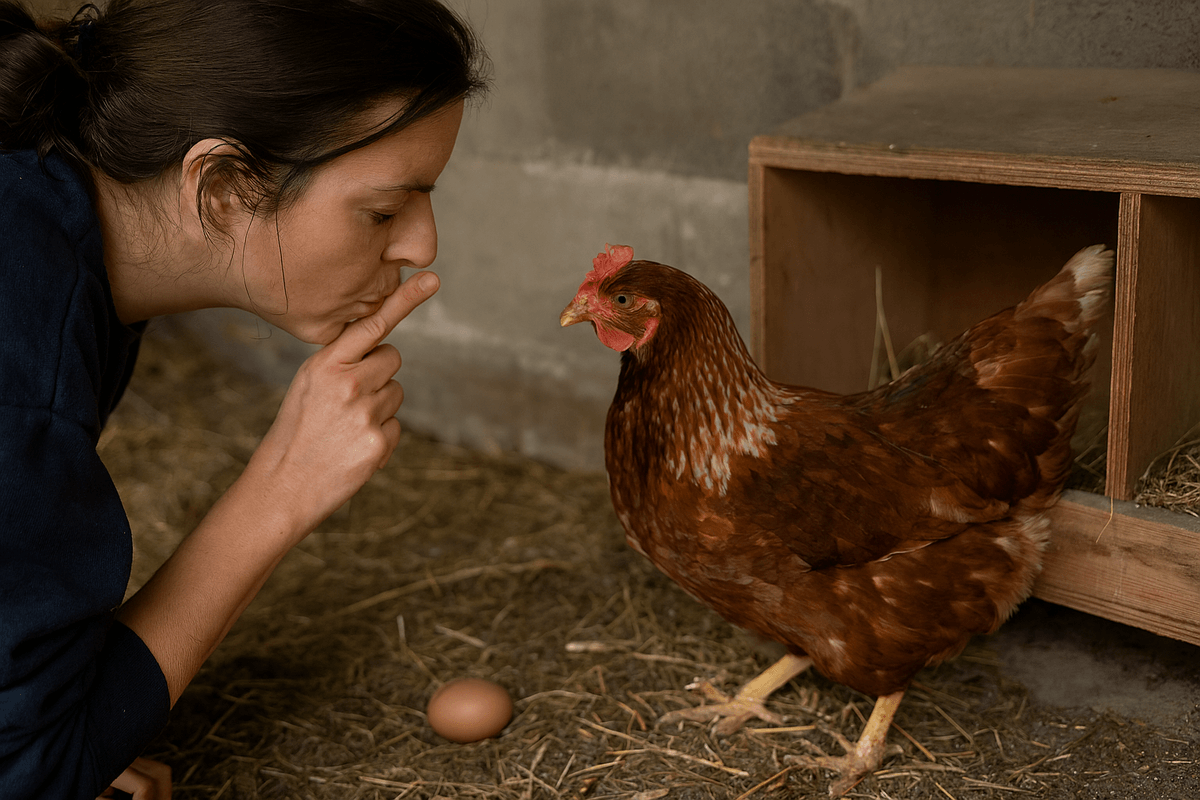
At the Auckland Food Show, Nadia Lim spoke about training chickens to lay eggs in the right spot.
Because mislaid eggs don’t make it to market.
And every misplaced egg is a cost.
Nanny raised an eyebrow.
“We’ve got dog whisperers, horse whisperers… now hen whisperers?”
She didn’t mock it. She documented it.
Because every new protocol—every new profession—gets folded into the price.
And every price gets folded into her civic audit.
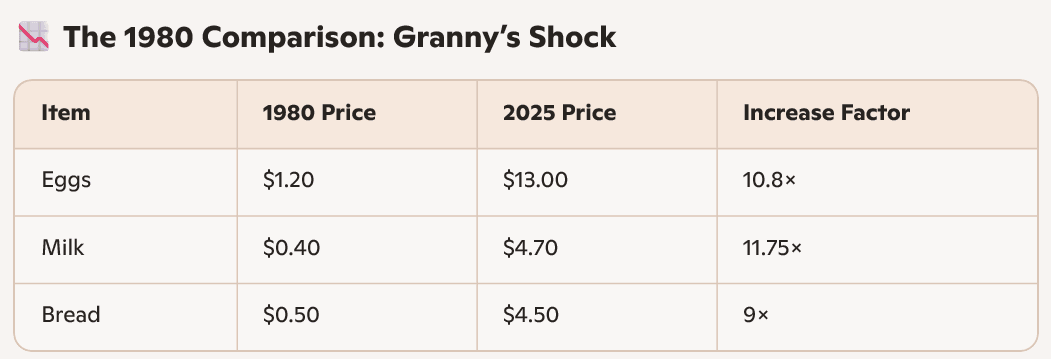
📉 The 1980 Comparison: Granny’s Shock
Granny would’ve been in a state.
“A dollar an egg? In a country that produces its own food?”
She’d have marched to Parliament with a carton in one hand and a ledger in the other.
Because back then, food wasn’t just local—it was logical.
🥄 Substitutes for Eggs: The Budget Workarounds
Nanny knew how to stretch a pantry. And if eggs were priced out, she’d pivot.
Today’s substitutes aren’t just vegan—they’re resilience protocols.
• Flaxseed: 1 tbsp ground flax + 3 tbsp water = 1 egg.
Good for binding in muffins, pancakes, and cookies.
• Chia seed: 1 tbsp chia + ⅓ cup water = 1 egg.
Let it sit until it gels. Works well in dense bakes.
• Mashed banana: ½ banana = 1 egg.
Adds moisture and sweetness—great for brownies and fritters.
• Unsweetened applesauce: ¼ cup = 1 egg.
Moisture-rich, ideal for cakes and scones.
• Aquafaba (chickpea brine): 3 tbsp = 1 egg.
Whips like egg whites. Use for meringues, mousses, and light batters.
• Orgran No-Egg or Easy Egg:
Powdered mixes made from chickpea or potato starch—available in NZ supermarkets.
These aren’t just substitutions. They’re civic adaptations—ways to keep pancakes on the table when the budget cracks.
Nanny wouldn’t have called it vegan. She’d have called it making do.
Legacy Thread: The Birth of Eggless Chocolate Cake
During the Great Depression, when eggs, butter, and milk were scarce or unaffordable, New Zealanders tuned in to Aunt Daisy’s radio show—a household staple from the 1930s through the 1960s. She wasn’t just a broadcaster; she was a pantry strategist. Her daily recipes offered practical substitutions, civic comfort, and a sense of shared resilience.
One of the most enduring recipes from that era was the eggless chocolate cake—also known as Depression Cake, Wacky Cake, or War Cake. It used:
• Flour, cocoa, baking soda, and vinegar for lift
• Golden syrup or sugar for sweetness
• Oil or dripping instead of butter
• Water or coffee for moisture
This cake wasn’t just dessert—it was proof of ingenuity. It showed that even when the staples cracked, the spirit didn’t. Families could still gather around a warm slice, even if the eggs had flown the coop.
🍰 Almost Gran’s Eggless Chocolate Cake (Golden Syrup Edition)
This looks very similar if I find the orginal I will add it into comments below:
Legacy status: Depression-born, pantry-proof, and still unbeatable.
Ingredients (approximate):
• 1½ cups flour
• ½ cup cocoa powder
• 1 tsp baking soda
• ½ cup golden syrup
• ½ cup sugar
• ½ cup oil or melted dripping
• 1 cup hot water or strong coffee
• 1 tsp vinegar (for lift)
• Pinch of salt
Method:
1. Mix dry ingredients in one bowl.
2. Combine wet ingredients in another.
3. Stir together until smooth.
4. Pour into greased tin and bake at 180°C for 30–35 minutes.
5. Cool, slice, and serve with legacy pride.
🧵 Legacy Logic
Nanny remembered the Great Depression.
She remembered rationing, ingenuity, and the dignity of making do.
But she never imagined a time when the basics would be this brittle—
when ethics, inflation, and pandemics would converge
to make pancakes a privilege.
She didn’t just audit groceries.
She audited leadership.
She threaded every receipt into a civic ledger—
one that asked:
Who’s protecting the pantry?
Who’s watching the wages?
Who’s making sure ethics don’t price out the essentials?
Because when eggs fly the coop, and the budget cracks with them,
it’s not just a grocery problem.
It’s a legacy one.
Haven't cracked it yet
Nanny didn’t just audit groceries—she audited grit.
She knew that when the staples cracked, the story didn’t end.
It pivoted. It rose. It got documented.
Because resilience isn’t just what you buy—
It’s what you build, what you adapt, and what you pass on.
And no matter what the pantry holds,
You are the star of your own story.