
If you’ve ever walked into a Kiwi home and wondered why everyone seems to know exactly what to do except you, this guide will save you from the classic newcomer blunders.
Being invited into a Kiwi home isn’t just a social call — it’s a quiet ceremony of trust, timing, and unspoken etiquette. In Aotearoa NZ , hospitality isn’t performed; it’s lived. It’s jeans‑and‑jandals casual, buffet‑style generous, and full of subtle cultural choreography that every local knows instinctively.
From the moment you cross the threshold to the long, winding goodbye in the driveway, each gesture tells you something about belonging. This guide unpacks the humour, heart, and hidden rules behind New Zealand’s most understated social ritual — the house invitation.
Come to my place
A Kiwi house invite may sound casual — a breezy “come over for kai” or “pop round later” — but beneath that relaxed delivery sits a whole ecosystem of unspoken expectations. Most locals absorb these rules by osmosis, but newcomers often discover them through spectacular misunderstandings. One poor guest once arrived with an empty plate, genuinely thinking the host must be so strapped they needed people to bring crockery. Another cheerfully said “see you later” at the door and thought they were literally coming back that same night.
These moments are hilarious in hindsight, but they’re also proof that Kiwi hospitality has its own quiet choreography — and this guide is here to help you learn the steps without the accidental comedy.
Being invited to someone’s house in New Zealand is not casual. It’s not impulsive.
It’s not something Kiwis do lightly.
A house invitation is a quiet milestone — a sign that:
- you’re trusted
- you’ve passed the vibe check
- you’re no longer “new”
- and you’re now part of the inner circle
Kiwis won’t say this out loud.They’ll act like it’s nothing.
But it’s something.
Here’s the unwritten guide.
The Invitation Itself — A Big Deal, Quietly
There are three levels of Kiwi invitation:
Level 1: “We should catch up sometime.”
Not an invitation. A polite noise.
Level 2: “Pop in if you’re passing.”
Only literal for family.Everyone else must confirm.
Level 3: “Come over.”
This is the real one.If you get a day and time, you’ve made it.
The Bring‑Something Rule (BYO Culture)
Unless you receive a formal written invitation to:
- a wedding
- a milestone birthday
- or a catered event
…assume it’s BYO everything.
This means:
- bring your own drinks
- bring something to share
- bring something even if they say “don’t bring anything”
- bring something as well as your drinks
What you bring becomes the host’s property.
Leftovers may be redistributed at the end, but the host decides.
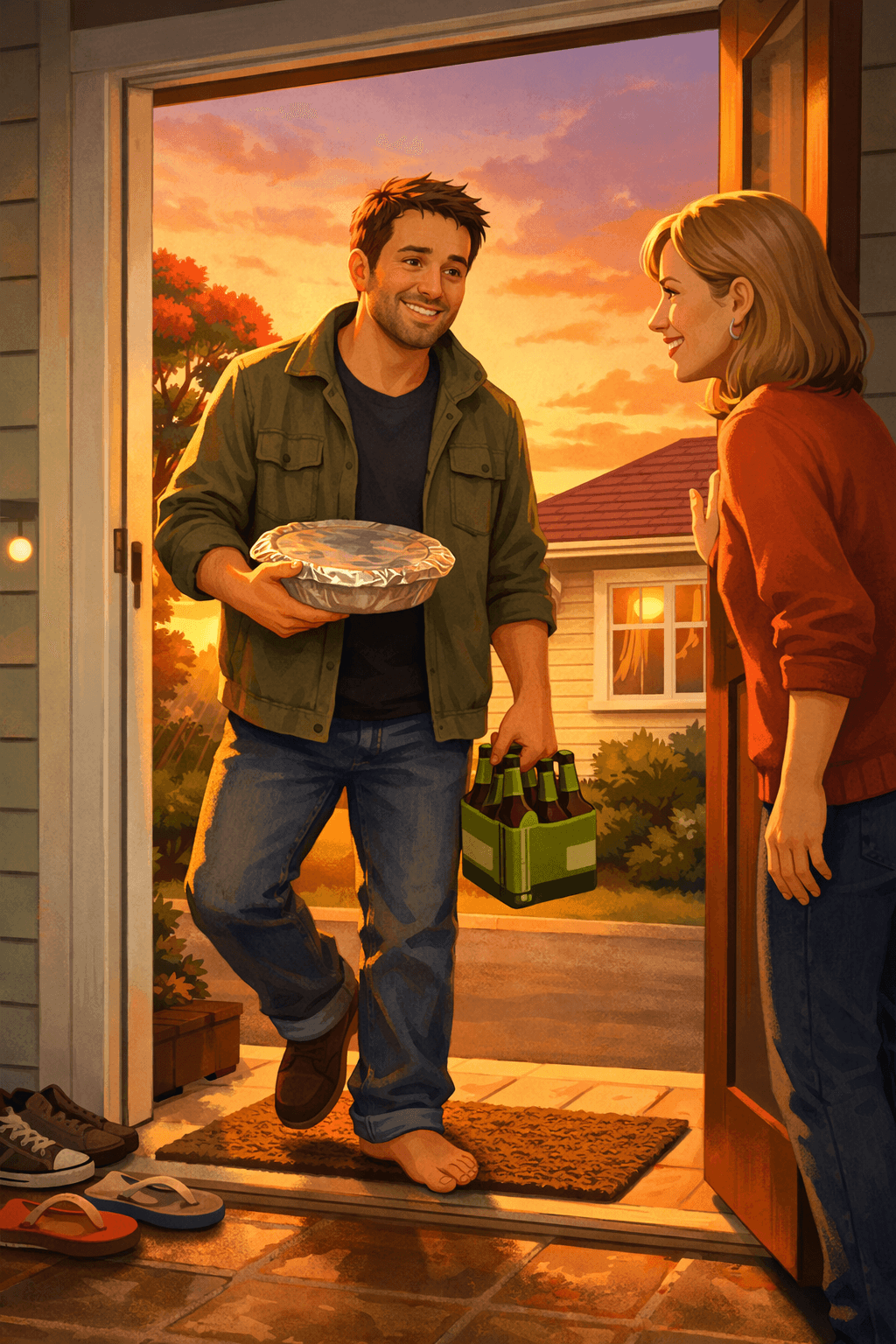
Shoes Off or Shoes On — The National Identity Crisis
Every Kiwi household has a stance.You must read the cues instantly.
If in doubt: start taking your shoes off.
The host will correct you if it’s not required.
This is the safest, most culturally accurate move.
The Dress Code — Jeans Are Always Safe
Unless told otherwise a Kiwi house invitation is not a formal event.
Standard Kiwi dress code:
- Jeans — always safe
- Smart casual — perfect
- A nice top — absolutely fine
- A T‑shirt — totally acceptable
- Shorts and jandals — seasonal but normal
If it’s a work colleague’s house, go slightly tidier — but still relaxed.
What you will never see:
A tie. Unless it’s a wedding.
The Kitchen Is the Social Centre
Kiwis don’t sit in the lounge first.They hover in the kitchen.
The kitchen is where:
- the drinks are
- the snacks are
- the gossip is
- the host is
- the real conversation happens
You will be told “make yourself at home,” but you will still hover until told where the glasses are.
The Table Setting — Buffet, Not Fine Dining
You will not see:
- polished silverware
- matching cutlery
- linen napkins
- place cards
Instead, you’ll find:
- food laid out buffet‑style
- plates stacked at one end
- cutlery in a cup
- people wandering around with their meal
- kids eating wherever they land
Kiwi homes are built for comfort, not ceremony.
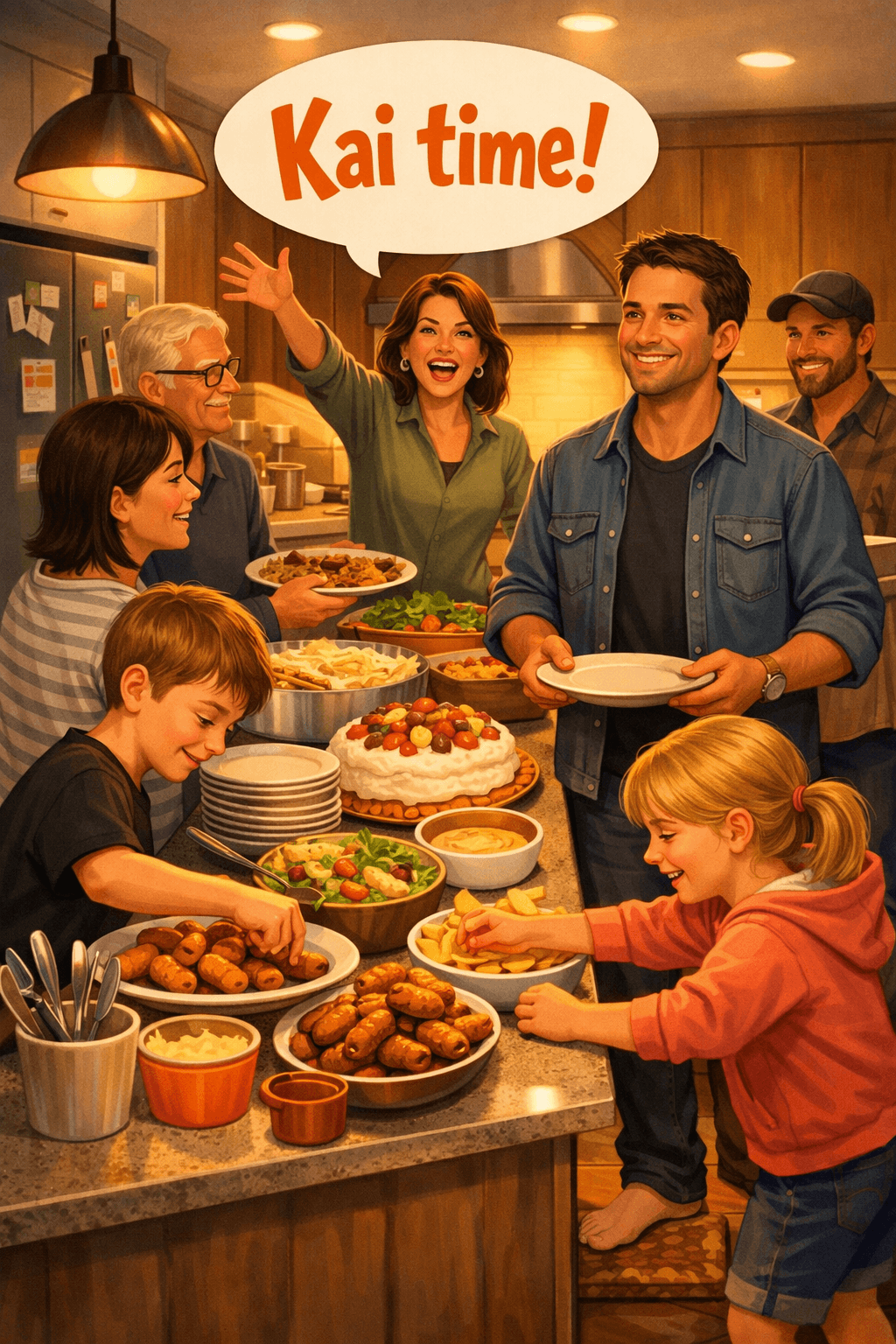
Kai Time — The Formal Call
Dinner is not served restaurant‑style. You are not a customer.
The official call is:
“Kai time!”
or
“Dinner’s up!”
This means:
- get your food
- don’t wait
- don’t let it get cold
- don’t stand around politely
“Kai time” is a command, not a suggestion.
The Food Queue Hierarchy
If there’s a crowd, the order is sacred:
- Parents with small children
- Children
- Older people
- Adults
- Host last
Don’t take all your favourite food.
Leave some for the rest of the queue.
Seconds are fine once the queue has been through once — but the first round must be fair.
Seating at Large Gatherings — Kids and Elders First
At big events, table seats are reserved for:
- children
- elderly guests
Everyone else:
- sits on couches
- perches on stools
- hovers in the kitchen
- or balances a plate on their knee
It’s respect, practicality, and tradition.
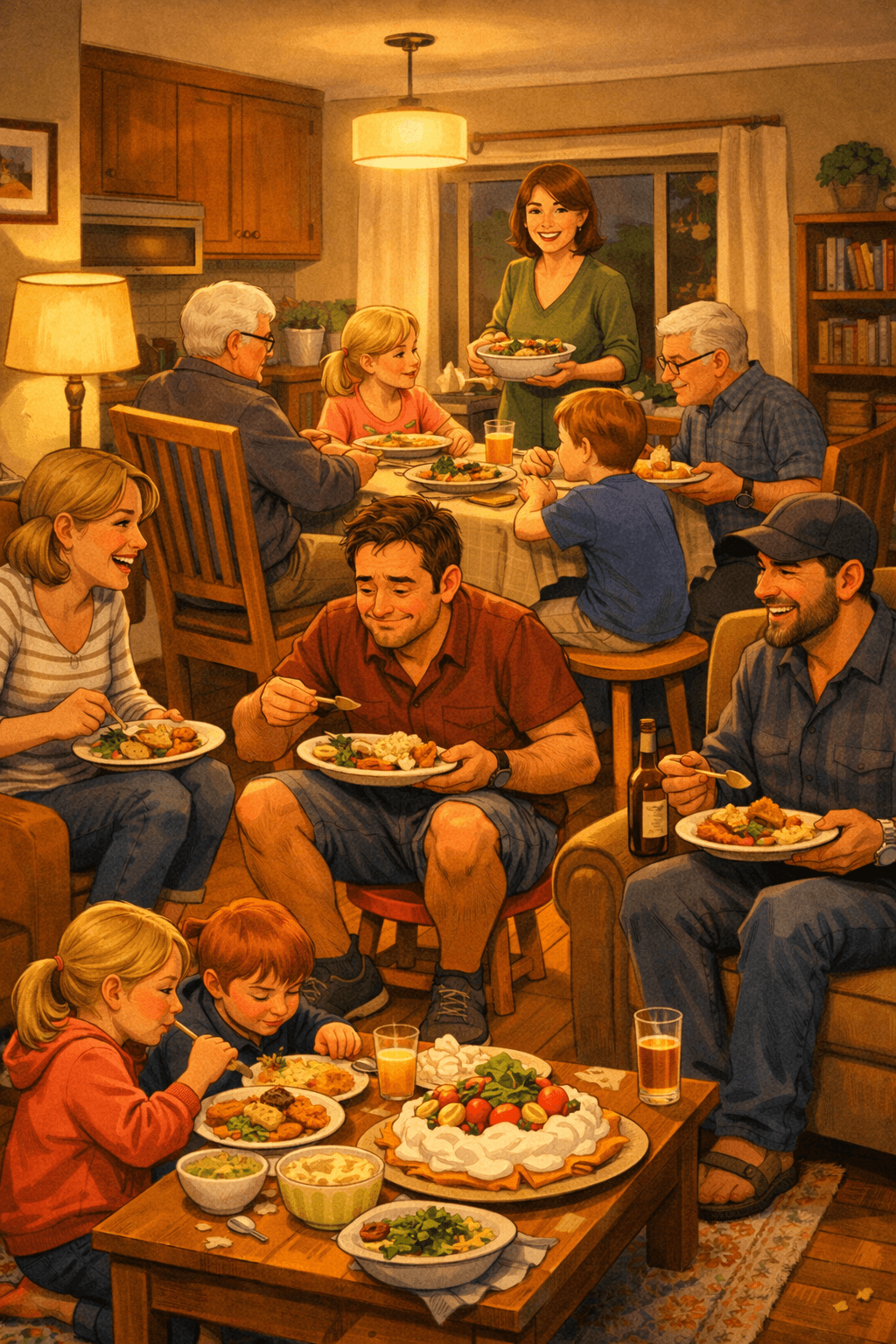
Pot‑Luck & “Bring a Plate” — The Kiwi Code
“Bring a plate” means:
Bring a plate of food.
Not an empty plate.
Pot‑luck dinners are exactly that: everyone brings something edible.
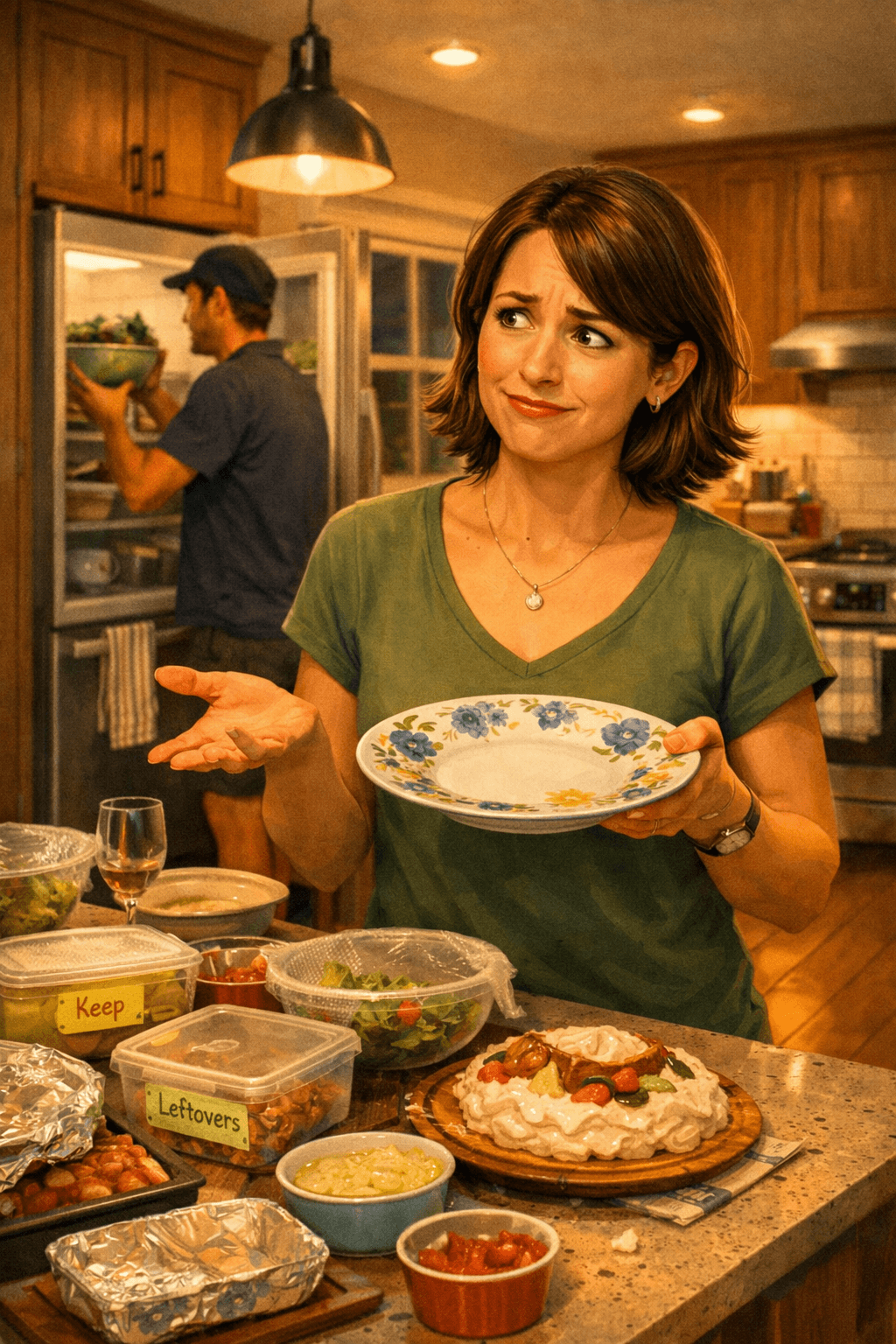
If you want to take your dish home, ask:
- “Do you want to keep the food?”
- “Should I leave this?”
If you don’t ask, it stays.
The Three‑Course Myth
Do not expect a formal three‑course meal.
A Kiwi “three‑course” event looks like:
Entrée:
Chips and dip, cheese and crackers, garlic bread.
Main:
Whatever is on the table when you’re called.
Dessert:
Often what you were asked to bring — anything from ice cream and strawberries to pavlova, cheesecake, or a frozen delight.
Allergies & Preferences — Tread Carefully
If you have allergies or dietary restrictions, tell the host.
They’ll accommodate you — but:
If you’re too fussy, you may not be invited again.
Kiwis are practical people.
The Kiwi Goodbye — A 45‑Minute Process
Leaving a Kiwi house is not quick.
Stages include:
- The first goodbye — in the lounge
- The second goodbye — at the door
- The third goodbye — on the deck
- The fourth goodbye — in the driveway
- The final goodbye — as the car reverses
- Bonus goodbye — if someone walks you to the gate
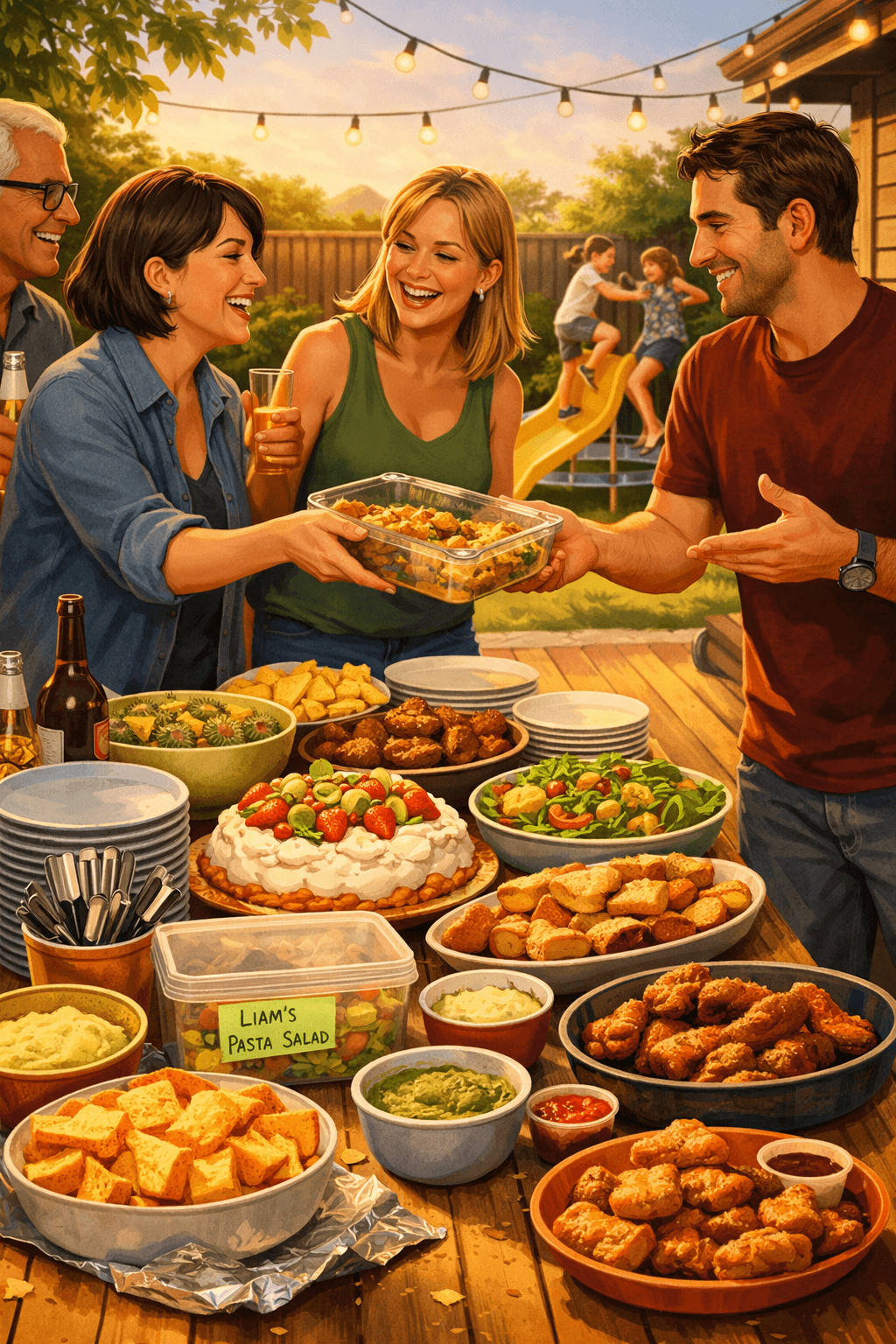
The Driver Controls the Goodbye
One person holds all the power:
The driver.
When they say:
- “We’ll head off soon.”
- “Finish up, we’re leaving.”
…that is the official warning.
If you want that power, you must be the sober driver.
The Goodbye Redistribution — Leftovers, Goodies, and Loaded Plates
During the goodbye phase, the host may redistribute:
- leftovers
- unopened snacks
- extra drinks
- desserts
If the host says “take it,” you take it.
If you want something, you ask “Do you mind if I take this?”
They won’t mind — but you ask anyway.
Loaded plate rule:
If your dish still has food on it, ask:
- “Do you want the food?”
- “Do you have something to put this into?”
Your plate goes home clean.
The Truth About Plates Going Missing
If your dish isn’t returned immediately, it’s not theft.It’s Kiwi chaos.
It was probably:
- put in the wrong cupboard
- tidied by a helpful guest
- mixed with the host’s dishes
- lost in the crowd
It is perfectly acceptable to ask for it back after a couple of days or earlier if you need it.
Dishes have been known to return after 12 months.
The Final Goodbye — And the Kiwi “See You Later”
After all the waves, leftovers, dishes, and driveway farewells, the host will say:
“See you later.”
This means:
- goodbye
- take care
- until life naturally brings us together again - not later the same day.
It is warm, genuine, and beautifully non‑committal.
The End of the Visit — The Heart of Kiwi Hospitality
A Kiwi house invitation is:
- relaxed
- generous
- practical
- communal
- full of food
- full of warmth
- full of unspoken rules
Being invited in means you’re trusted. Being invited back means you’re family.
These are the voyages of Random Circuits, boldly entering the arena of ideas that disrupt, challenge, and transform.