
People don’t resent wealth. They resent hypocrisy — especially when they are the ones paying for it. For too long, New Zealand has lived inside a quiet but corrosive divide — a them and us culture that shows up most sharply in how we treat political remuneration and political privilege. Ordinary families are told they should be able to survive on an Accommodation Supplement of $149 a week, while MPs receive housing support closer to $1,000 a week.
If we want a political culture that genuinely works together — not in parallel universes — then it’s time to walk the talk.
Goverment Remuneration
The current government didn’t create the remuneration system — but if they don’t change it, they accept it
Every government inherits systems it didn’t design.But once you’re in office, not changing a broken system becomes the same as endorsing it.
The current government didn’t create:
- automatic pay rises
- elite benefits
- privileged housing support
- special exit packages
- party responsibilities funded by taxpayers
But if they leave it untouched, they accept it — and they accept the awkward moments that come with it.
Moments like:
- telling the country to tighten its belts
- while MPs receive a pay rise they didn’t stop
- telling families to manage on $149/week
- while MPs receive $1,000/week in housing support
- telling workers to live under statutory minimums
- while MPs enjoy elite entitlements
These moments will continue until the system changes.
New Zealanders don’t resent wealth.They resent double standards.
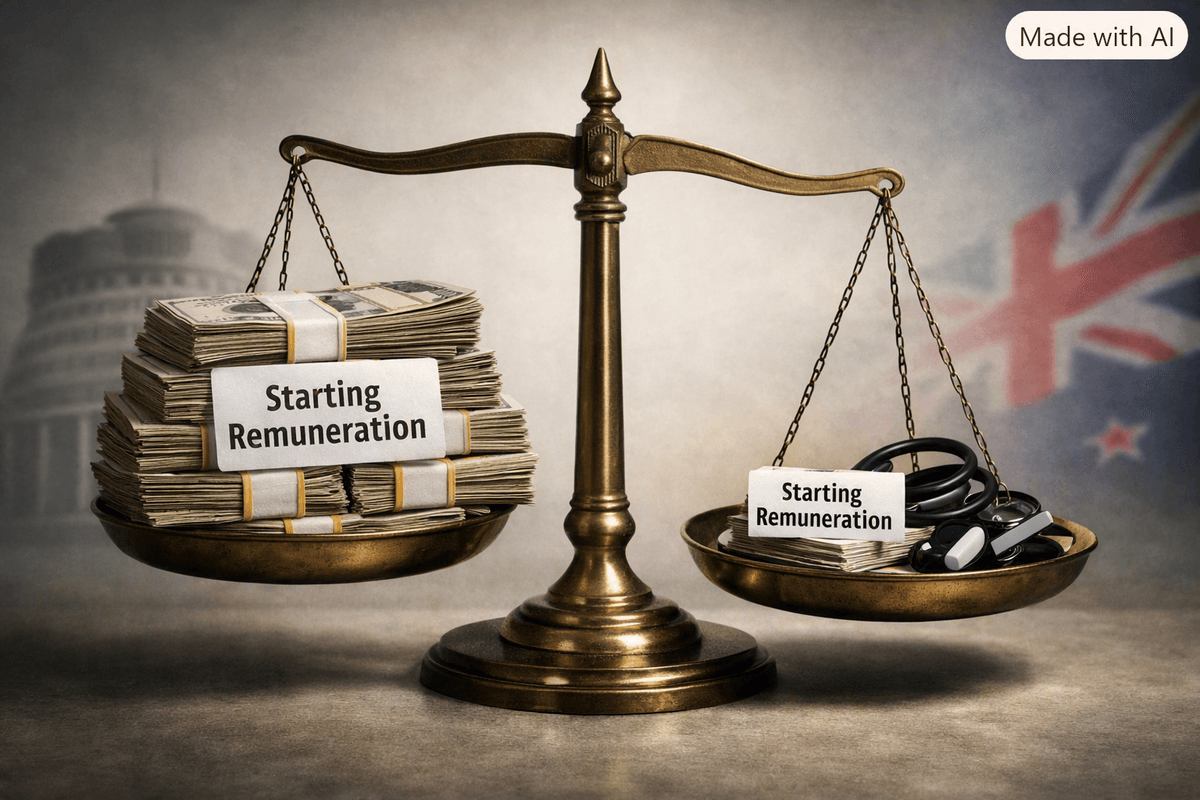
Who are they working for?
Do you want a government working for the good of the country — or one working for the good of its own party?
A government cannot genuinely work for the country if:
- party strategy
- party messaging
- party travel
- party fundraising
- party discipline
- party leadership responsibilities
are quietly subsidised by government privilege.
When party politics rides for free on public resources, the priorities blur.Government becomes a vehicle for party agendas instead of national ones.
The only way to prevent that is structural:
Government duties must be funded by the public. Party duties must be funded by the party.
This separation is how you ensure a government works for the country, not for itself.
Paid More to Oppose the Government?
Here’s the accurate picture:
- All MPs receive the same base salary.
- Those with extra governmental responsibilities — Ministers, the Prime Minister, the Deputy Prime Minister, and certain presiding roles — receive additional pay.
- But the Leader of the Opposition also receives extra pay, even though their additional responsibilities are party responsibilities, not government responsibilities.
That’s the structural flaw.
The Leader of the Opposition is paid more not because they carry additional duties for the country, but because they carry additional duties for their party.
And here’s where the incentive becomes unhealthy:
Opposing every initiative isn’t good for New Zealand — it’s good for party politics.
When the role is financially elevated, the behaviour often follows:
- automatic opposition
- reflexive criticism
- blocking for the sake of blocking
- positioning instead of problem‑solving
- party advantage over national progress
None of that is “holding the government to account.”It’s simply performing opposition because the role rewards it.
New Zealanders don’t resent leadership.They don’t resent strong debate. They don’t resent scrutiny. They resent paying extra for someone to oppose everything — even when cooperation would benefit the country.
If a party wants its leader to have elevated pay, elevated status, or elevated responsibilities, then the party should fund that — not the taxpayer.
This is fairness.This is clarity. This is accountability. This is walking the talk.
The Remuneration Loop
MPs have been over‑compensated to the point where the wrong incentives now exist
This is one of the most uncomfortable truths in New Zealand politics:
MPs are paid so generously that people who could never earn that wage in ordinary life now sit in Parliament because of the wage itself.
A school leaver can walk straight into a salary well over $160,000 a year, plus generous benefits such as:
- housing support
- travel allowances
- staff resources
- office funding
- technology and communications support
- superannuation contributions
A person with no established career can walk straight into the same total package as someone with decades of expertise.A person with multiple degrees and specialist training also walks into the same package.
All receive the same generous compensation — regardless of skill, experience, or capability.
Meanwhile:
- nurses
- teachers
- paramedics
- social workers
- early childhood educators
do not even come close to that starting salary or those benefits, despite carrying responsibilities that directly affect lives.
This isn’t fairness. This is distortion.
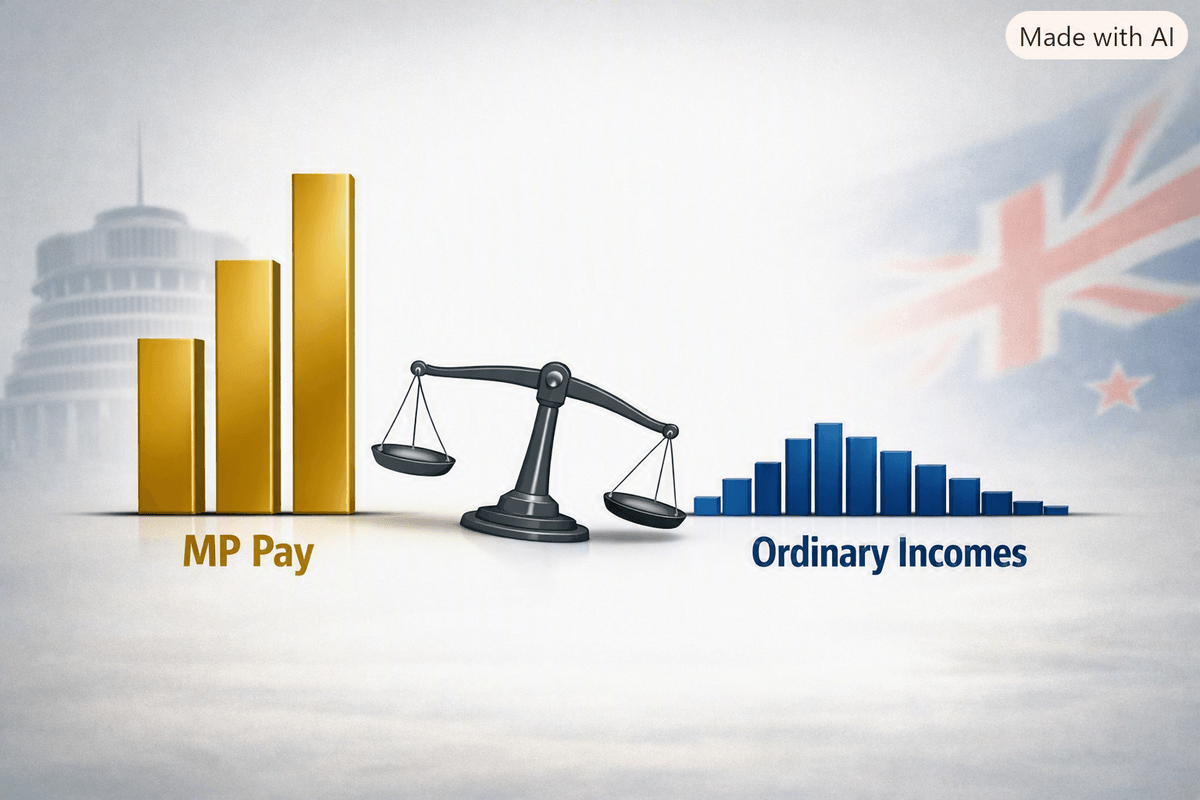
It creates a Parliament where:
- some people are there for the pay, not the responsibility
- skill is not rewarded
- expertise is not recognised
- popularity substitutes for competence
- the public pays for over‑compensation while essential sectors struggle
A fair remuneration system would:
- align MP pay with realistic New Zealand incomes
- recognise specialist expertise
- reward genuine capability
- remove the incentive to enter Parliament for financial reasons
- restore trust by grounding pay in reality
This is structural fairness — not ideology. This is walking the talk.
Skill Should Matter
Imagine a remuneration system that actually represented skill and responsibility
Imagine if political remuneration wasn’t built around insulation and privilege, but around alignment:
- MPs receiving only statutory leave, just like every other worker.
- MPs receiving only statutory exit entitlements, just like every other worker.
- No automatic pay rises.
- No special benefits.
- No elite parental leave top-ups.
- No privileged transition packages.
And if a party really wanted to support its MPs?They could top it up from their own funds, not from the public purse.
That’s personal responsibility.That’s integrity. That’s leadership lived, not performed.
Realistic Base Pay
Imagine a base salary that actually reflects New Zealand — not a political bubble
Right now, MPs are paid the same whether they bring:
- deep governance experience
- real-world sector expertise
- community leadership
- policy literacy
- or simply popularity
Popularity gets you elected.But popularity is not a skill set.
Imagine a remuneration system where:
- the base salary aligns with a realistic New Zealand income, not an elite bracket
- MPs are paid for the skills they actually bring, not the status of the role
- specialist expertise is recognised
- Parliament becomes a place where competence is rewarded, not just visibility
MP pay has simply moved out of step with real New Zealand — and it needs to be brought back into alignment, while still recognising the skills people bring to the table.
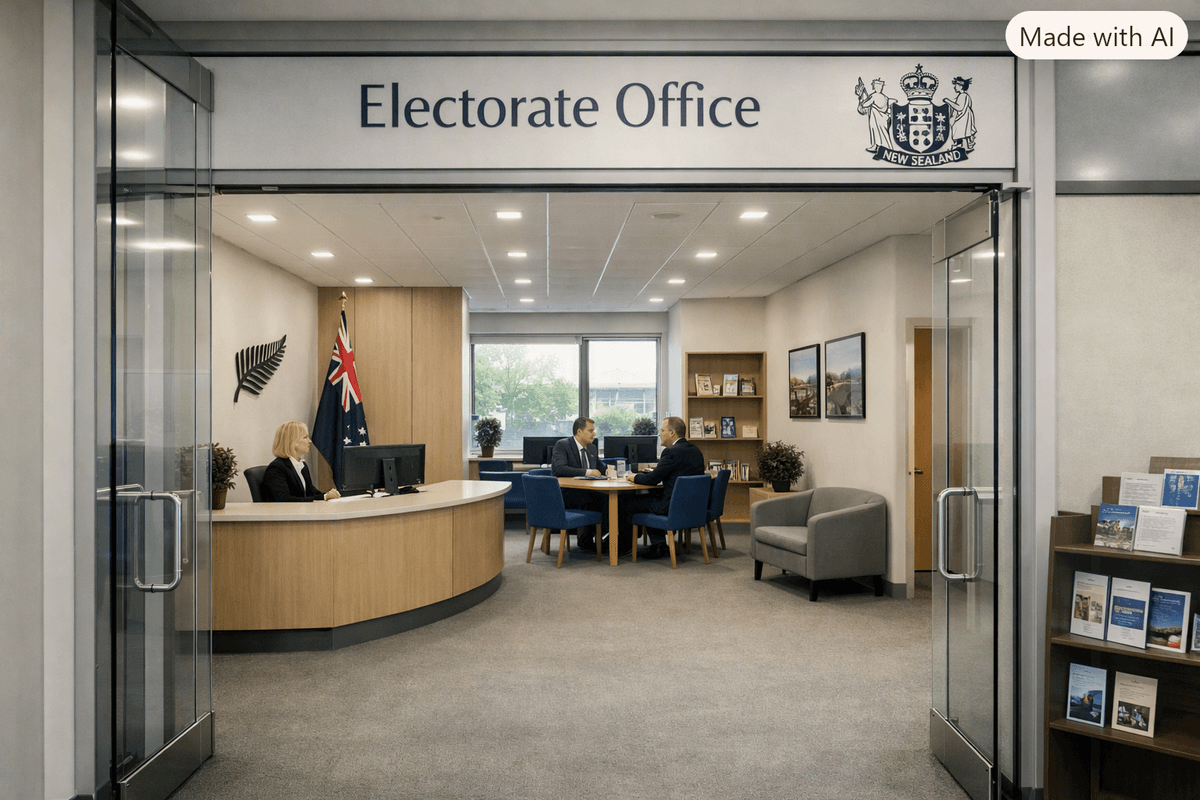
Electorate MPs Need Official Offices
Imagine electorate MPs with real government offices — not personal home setups
Many electorate MPs work out of:
- personal home offices
- rented spaces
- improvised setups
- locations funded by their own allowances
Meanwhile, government departments operate from:
- secure premises
- staffed offices
- consistent infrastructure
- professional environments
Why should MPs — the people responsible for representing communities — be left to cobble together their own workspaces at the taxpayers expense?
Imagine a system where:
- every electorate MP has a proper government office, not a personal one
- communities know exactly where their MP is located
- staff work in safe, professional environments
- public access is clear, consistent, and equitable
MPs are grounded in their communities, not floating between temporary spaces
This is not luxury. This is basic democratic infrastructure.
Segregation of Party Politics
Government duties belong to the public. Party duties belong to the party.
New Zealand has never drawn this line clearly — and that’s why the “one rule for you, one for us” culture keeps resurfacing.
Government duties include:
- representing constituents
- passing legislation
- attending select committees
- performing ministerial functions
- fulfilling public obligations
These are funded by taxpayers because they serve the public.
Party duties include:
- caucus strategy
- internal leadership responsibilities
- fundraising
- messaging
- political travel
- party meetings
- internal discipline
- policy development before it becomes public business
These serve the party — not the public — and should be funded by the party.
This is the structural correction New Zealand has been missing.
No Free Rides for Party Politics
Why party politics shouldn’t ride for free on government privilege
It is common for MPs — especially senior ones — to add party‑political events onto the end of government trips. They use government vehicles, government staff, government logistics, and government time. The public pays for the infrastructure, and the party gets the benefit.
This isn’t illegal. But it isn’t fair.
Government resources exist for government duties, not party duties. When an MP switches from public business to party business, the cost burden should switch too.
Imagine a system where:
- government travel covers government work only
- party travel covers party work only
- any blended trip requires a party contribution
- staff waiting around for the political add‑on receive a koha from the party, not the taxpayer
It’s about a clear separation between party funding and taxpayers’ money.
The Missing Independents
What stops people from standing alone for seats?
Legally, nothing. Structurally, everything.
Standing as an independent is allowed — but the system is stacked in favour of parties because:
- parties have funding
- parties have volunteers
- parties have data
- parties have advertising
- parties have infrastructure
- parties have brand recognition
- parties use government resources
When parties use government resources, independents are left competing without the same taxpayer‑funded support.
Movitx remuneration reform levels the playing field by removing:
- elite entitlements
- party-funded-by-taxpayer perks
- financial incentives tied to party hierarchy
It doesn’t promote independents — it simply removes the unfair advantages parties currently enjoy at taxpayer expense.
Recognising that every citizen matters
Removing elite entitlements isn’t just symbolic — it creates real savings.
Savings that can be redirected into policies that recognise something simple and foundational:
Every citizen is important.Every family deserves dignity.Every child deserves a strong start.
That’s the purpose behind the Baby Bundle:
- universal baby essentials
- bulk procurement for cost efficiency
- support that meets real needs
- a warm, practical welcome for every new child
- automatically opt in but option to opt out
It’s not extravagant.It’s not ideological.
It’s not political.
It’s a recognition that the people who fund the system should benefit from it — not just the people who govern it.
Because when you stop over‑funding political privilege, you free up resources to invest in actual families, not political structures.
Fairness begins with recognising every citizen. And it starts at the cradle.

Time to walk the talk
If New Zealand wants to move past the “them and us” divide, the shift won’t come from slogans or speeches. It will come from behaviour — from leaders choosing to live under the same rules as everyone else.
A statutory-only remuneration system is not radical.It’s not ideological.
It’s not partisan.
It’s fair.It’s responsible.It’s unifying.
And it’s time.
The sample Remuneration & Accountability Act 2026 in the MOV ITx POP Framework — released at the end of this week on movitx.co.nz — addresses the structural issues outlined in this blog.
These are the voyages of Random Circuits, boldly entering the arena of ideas that disrupt, challenge, and transform.

Bought to you by MOV ITx — we move it, prove it, then multiply it.